E.W. Scripps School of Journalism :: Scripps Blogs http://www.scrippsjschool.org/news/ Scripps Blogs en-us http://blogs.law.harvard.edu/tech/rss graphic reactor 2.3 Highlights of Schidlovsky and Uenuma’s Visit http://www.scrippsjschool.org/blog/post.php?postID=120 kalyango http://www.scrippsjschool.org/blog/post.php?postID=120

By Taylor Mirfendereski and Alex Moorhead

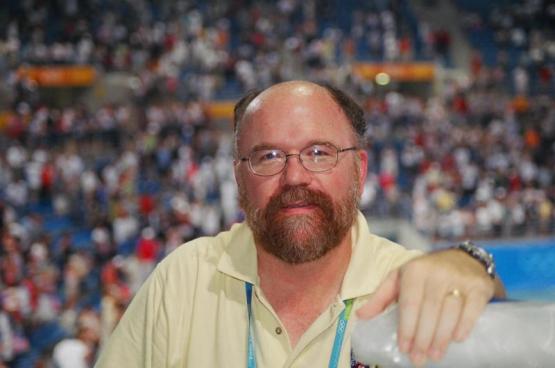
The IIJ recently hosted two prominent global journalists, John Schidlovsky and Francine Uenuma, at Ohio University. The IIJ recently hosted two prominent global journalists, John Schidlovsky and Francine Uenuma, at Ohio University. During their time in Athens, Schidlovsky and Uenuma shared with faculty and students their current journalism endeavors and previous international journalism experiences.

Schidlovsky is the director of the International Reporting Project and Uenuma is a multimedia editor for The Washington Post.

IIJ student-ambassadors, Taylor Mirfendereski and Alex Moorhead, present the highlights of the journalists’ campus visit in the following interviews.

Schidlovsky and Uenuma discuss why journalism students should care about international affairs.

Schidlovsky and Uenuma discuss their motive for visiting Ohio University and speak of opportunities for OU students to enter the world of international journalism.

Schidlovsky and Uenuma discuss the role of the International Reporting Project and Ohio University's Institute for International Journalism in promoting international journalism.

]]>
2010-03-8T05:24:00-05:00
IIJ Hosts Global Journalists at Scripps http://www.scrippsjschool.org/blog/post.php?postID=119 kalyango http://www.scrippsjschool.org/blog/post.php?postID=119 This winter quarter, the Institute for International Journalism (IIJ) is proud to present two prominent global journalists, John Schidlovsky and Francine Uenuma to the Scripps community from Monday Feb 22 to Wednesday Feb 24, 2010. Mr. Schidlovsky and Ms. Uenuma will share their international journalism experiences in volatile regions with our students and the Scripps community. They will also meet with the Students for Global Media and Diversity (SGMD), an OU student association affiliated with the IIJ. They will also have an informal meeting with the SGMD members in Sing Tao Center, in room 101, on February 22nd at 1pm. The main lecture to the Scripps community will take place in Anderson auditorium, room 101 on Tuesday Feb 23, at 5pm.

During the two-day visit, they will give a lecture about the current trends, challenges and the future of international journalism to student taking our Foreign Correspondence class on February 22nd in Scripps 114 at 3pm.

To learn more about the two global journalists, visit the IIJ Blog by clicking on the following link:

http://scrippsiij.blogspot.com/

]]>
2010-02-15T05:03:00-05:00
Journalism Study Abroad to UGANDA http://www.scrippsjschool.org/blog/post.php?postID=115 kalyango http://www.scrippsjschool.org/blog/post.php?postID=115 The Office of Education Abroad now accepts online applications for the School of Journalism’s Summer Study Abroad program to Uganda. Application deadline is March 5, 2010. The four weeks, 9-credit hours, Summer course starts on July 21, and ends on August 23, 2010.

When you apply online, look for the following name of the journalism summer program: "Uganda: Media, Diversity and Governance: Summer 2010."

Students are encouraged to submit an online application through the Office of Education Abroad.

Students will be accompanied by Dr. Yusuf Kalyango, a journalism professor and Director of the Institute for International Journalism, who will teach a tier III course.

We will only accept 30 applications by March 5, 2010 and only admit a maximum of 16 students to the summer program. You may cancel your application by March 12, if you decide not to participate in the program, but you need to have applied (secured a place) in order to be considered.

Please come to the information session in Sing Tao - Room 101, on Feb 02, at 6:00pm to learn more about the program.

All questions regarding the fees and affordability will also be addressed. We look forward to seeing you on 02/02/10.

]]>
2010-01-16T05:47:00-05:00
STEVE SAPIENZA VISITS OU CAMPUS http://www.scrippsjschool.org/blog/post.php?postID=111 kalyango http://www.scrippsjschool.org/blog/post.php?postID=111 The Institute for International Journalism and the College of Communication in conjunction with The Pulitzer Center on Crisis Reporting has organized yet another campus visit by independent filmmaker and roving journalist, Steve Sapienza. Steve will be here from Tuesday October 27 to Thursday October 29, 2009.

He will share his experiences in reporting international crises. He will give lectures on Tuesday and Wednesday, which will provide Ohio University students with fresh information on global issues such as water crisis and the climate change in countries he has covered.

“Easy Like Water: Reporting from the Front Line of Climate Change”

In Bangladesh, water poses a relentless threat to about 150 million people in a country the size of Iowa. With increasingly violent cyclones and accelerating glacier melt upstream, flooding may create more than 20 million “climate refugees” from Bangladesh, alone, by 2030. India is already building walls to keep Bangladeshis out.

Steve will speak to the university community in Anderson Auditorium located in Scripps Hall, Room 111 on October 28, at 6pm. Come and join the conversation on global climate change in this region with Steve Sapienza, an award-winning news and documentary producer who has covered a wide range of global issues" on Wednesday October 28, 2009 from 6pm to 7pm in Anderson Auditorium.

Stephen Sapienza is an award-winning news and documentary producer who has covered a wide range of global issues, including the HIV crisis in Haiti, sex workers in the Dominican Republic, child soldiers in Sierra Leone in Africa, the Cuban military crisis, and landmine survivors in Cambodia. He was co-producer for LiveHopeLove.com, a web project about HIV in Jamaica that was nominated for an Emmy in 2009. In 2008, he received the Ruth Adams Award for reporting on dwindling water supplies in Asia. In 2002, he produced "Deadlock: Russia's Forgotten War" for CNN Presents, winner of a CINE Golden Eagle.

He will dine also hold one-on-one talks with some students in Scripps 205 and in Sing Tao 101. Please email Professor Kalyango if you are interested in having an exclusive visit with Steve on Thursday morning between 10:00 am and 11:30am.

]]>
2009-10-27T02:43:00-05:00
The Rules (and the Mysteries) of Threes http://www.scrippsjschool.org/blog/post.php?postID=105 sweenem3 http://www.scrippsjschool.org/blog/post.php?postID=105 For anyone trying to improve narrative structure through parallel syntax, three is the magic number. You could say it is a virtuous triumvirate.

When you want to make a point by providing evidence, three examples are best. Two examples don't seem satisfying, and four seem like overkill. So, if I were describing the values held dear by the tribe of my Dinka friend, John Dau, as I did when writing at home last night, I might say the Dinka believe in hard work, strong faith, and early education.

Note: those are indeed three qualities, although the Dinka have many more, and they are presented through paralellism. Hard work (adjective, noun), strong faith (adjective, noun), and early education (adjective noun).

If I were to violate parallel syntax, I might stupidly change one of the three to some other construction, perhaps involving a gerund: the Dinka believe in hard work, strong faith, and wrestling. By making the last of the series, wrestling, a different form of noun than those that preceded it, I have broken the natural rhythm that builds throughout the sentence. Readers might feel as if the sentence doesn't sound right, but not know exactly why.

Today, in my magazine features writing class, after we talked about parallelism and the rule of threes, two students presented clippings that serendipitously illustrated that point. One clipping, about a man imagining his life in an imploded economy, had him trying to envision himself "without a dime, without a home, without a bookmark in society." A second student shared a clip from a magazine description of the first Mickey Mouse cartoon: "Pegleg charging, music pounding, Minnie squealing -- and Mickey rushing madly to the rescue."

After that, I started seeing narrative elements in threes everywhere. The father, son, and holy ghost. Tinker to Evers to Chance. Peter, Paul, and Mary. Winkin, Blinkin, and Nod. The Lion, the Witch, and the Wardrobe. Man, Woman, and Child. The Scarecrow, the Tin Man, and the Cowardly Lion. The priest, the minister, and the rabbi who go into the bar.

Not to mention Larry, Curly, and Moe.

I could go on (and on, and on).

This got me thinking. Why is it that we seem to be hard wired to cluster things in threes?

I like to think that three adds an engaging level of complexity to any communication. One is single. Two is dual. Three is, quite satisfyingly, the beginning of something much richer.

Three is a beginning, a middle, and an end. Mother and father plus child is family.

In physics, the "three-body problem" means that it very quickly becomes impossible to chart the orbits of three heavenly bodies that interact with one another. Three adds a level of complexity and chaos to our understanding of the complex and chaotic world.

Are these reasons why good writers so often deal with three elements? Who knows. All I can say for sure is that groups of three seem to squeeze, tease, and please the mind. And writers should pay attention to their power.

]]>
2009-09-10T17:55:00-05:00
My Guide to AP Style http://www.scrippsjschool.org/blog/post.php?postID=96 sweenem3 http://www.scrippsjschool.org/blog/post.php?postID=96 (Note: Versions of this page have been linked to editing sites at dozens of American universities. The author is a writer for the National Geographic Press and a former copy desk chief at the Fort Worth Star-Telegram.)

As you read the AP Stylebook, pay extra attention to these entries:

• a, an -- You use the article "an" in front of words that sound as if they begin with a vowel, regardless of how they are spelled. So, you would say it is an honor to be here today. (Hear the flat-a sound that begins the word? It sounds as if it should be spelled AWN-or.) Or, if you already know this rule, you could say this is a useless exercise. (Hear the "y" sound in "useless?")

• academic degrees -- Put an apostrophe in bachelor's degree and master's degree. This is to show possession. The degree belongs to the bachelor or master (that's you). Even when shortened to bachelor's and master's (no "degree" afterward), you keep the apostrophe.

• addresses -- Abbreviate the words street, avenue and boulevard (think S-A-B), but only if they appear after a numbered address. Also abbreviate compass directions, but only if they appear with a numbered address. So, you'd write 50 S. Court St., but if you leave off the house number, you'd write South Court Street. Got it? Never abbreviate drive, highway, place, or any of the other words that might follow an actual street name such as Court, Union, Ventura, Lombard, Pennsylvania or whatever.

• affect, effect -- Ninety-nine times out of 100, if the word you use is a verb, spell it with an "a," and if it is a noun, spell it with an "e." In these two usages, affect means to influence and effect means the result of an action -- and those are by far the most common uses. Examples? Student: How will this affect (try substituting the word "influence") my grade? Teacher: I don't know what the effect (try substituting the word "result") will be.

• a.m., p.m. -- Recognize that 8 p.m. tonight is redundant. So, write 8 tonight, or 8 p.m. today.

• Anglican Communion -- This is the first church in the AP Stylebook. Read every church entry carefully. Each religion has its own lexicon, and if you screw it up you make enemies.

• Bible -- Capitalize when you mean the black book in American hotel rooms everywhere. Lowercase when you use the term as slang for an authoritative source. Example: Elements of Style is my bible.

• burglary, larceny, robbery, theft -- Ooooo, tricky. There is a difference between a burglar and a robber, and you have to know it. Your stylebook gives you a definition of these terms, so let me give you examples of how to use them, all taken from the same scenario. 1. Larceny: If I leave my B-52 CD's on the floor outside my office door and you take them -- without breaking into my office and without threatening me, then you have committed larceny, also known as simple theft, and you are a thief. 2. Burglary: If you break into my office (or even pass through the unlocked door without my permission) and take the B-52 CD's off my desk, but did not threaten me, you are a burglar. 3. Robbery: If you see me carrying my B-52 CD's and are overcome by an uncontrollable urge to possess them (hey, I wouldn't blame you), and you demand them from me and make a real or implied threat, you are a robber. 4. Sometimes you see the phrase "aggravated robbery" in newspapers. The term means that the robber not only made a threat but also displayed a weapon, such as a gun or knife. This person is still called a robber.

• Church of Jesus Christ of Latter-day Saints -- There are two "t's" in Latter. Note the hyphen and the lower-case "d."

• City Council -- Capitalize when referring to a specific City Council, even if the name of the town is not given. Mayor Doug Thompson will ask the City Council to spend more on patrolling near campus.

• co- -- Sometimes it's followed by a hyphen, and sometimes it's not. When the prefix is part of a word indicating occupation, hyphenate, as in co-worker, co-owner. There are no hyphens when the letter "o" is doubled, as is cooperate and coordinate.

• collective nouns -- In the United States, nouns such as team, Congress, committee and group take singular verbs, such as "is." These collective nouns also take the pronoun "it" instead of "they." So, if you're confused about whether a word such as "team" is an "it" or a "they," try making up a sentence using the word followed by "is" or "are." You wouldn't say "The team are playing well." Try this, instead: "The team is playing well. It may win this game." That's correct.

• composition titles -- I don't care whether you italicize or put quotation marks around composition titles. What I want you to notice is which words in the titles of books, plays, movies and TV programs are capitalized, and which are not. AP's rule is this: Capitalize the first word of any title. Capitalize all words that are four letters are longer. Do not capitalize the articles "a," "an" and "the." Do not capitalize conjunctions or prepositions, unless they are four letters or longer. Examples: The Elements of Style; Gone With the Wind ("with" is a preposition, but it is capitalized because of the four-letter rule). So, what do you capitalize? The first word, any word four letters or longer, and all nouns, verbs, adverbs, adjectives and pronouns.

• days or dates? -- Not apparent in the AP stylebook, but it ought to be. The common rule for publications is to use the days of the week -- Monday, Tuesday, etc. -- when referring to events within seven days, before or after the publication date. When writing about events more distant, use months and dates, such as "April 30" and "June 5." Do not use both. Do not use yesterday, today and tomorrow -- if a story were delayed before publication, the time elements would be wrong.

• dimensions -- Use figures for all numbers that indicate height, weight, width, etc., even for numbers less than 10. Example: The book weighs 2 pounds.

• directions and regions -- Capitalize words such as North and South if they refer to places you can stand and say, "I am standing in the -------." That means they are nouns referring to regions, and AP says capitalize them as such. When referring to compass directions, such as "I am walking north," then lower case them.

• essential clauses, essential phrases -- If you use the word "which" to introduce a phrase or clause, precede it with a comma. Do not precede the word "that" by a comma. Use "which" to introduce non-essential phrases and clauses, which can be eliminated from a sentence without changing its essential meaning (such as in this sentence). See? If you drop the clause "which can be eliminated, etc.," then the remaining sentence still has the same meaning -- Use "which" to introduce non-essential phrases and clauses. Use "that" when you want to use a phrase or clause that cannot be removed from a sentence without changing its meaning (such as in this sentence). If you eliminate the essential clause from that sentence, you are left with "Use 'that' when you want to use a phrase a clause." That gives a clearly different meaning than the original sentence, because you know by now that you want to start some phrases and clauses with "which," and thus the sentence is illogical. If this causes you problems, let's talk.

• fewer, less -- Use fewer for things that you can count. Example: I have fewer quarters than you do. (You can count, "One quarter, two quarters, three quarters.") Use less for things you cannot count. Example: I have less cash than you do. (You don't say, "One cash, two cash, three cash.")

• governmental bodies -- Read this entry carefully to determine when to capitalize names of agencies and departments.

• highway designations -- These bedevil many journalists, but they're easy. Capitalize U.S. Highway 89, or even U.S. 89. Capitalize Utah Highway 33, but notice that you lowercase the "s" in state Highway 33.

• Inc. -- Do not precede it with a comma

• Islam -- Read not only every entry for Christian churches, but also the entries for other religions. That way, you'll avoid a mistake made by an Ohio paper when it ran a column referring to Muslims worshiping "their God." Muslims, Jews and Christians worship the same God.

• it's, its -- "It's" is a contraction that means it is, or it has. "Its" means "belonging to it." Whenever you must choose one or another in a sentence, try inserting the phrase "it is" or "it has." If one of those pairs makes sense, then use it's. I use funny word associations to remember things like this. Technically, they are called mnemonic devices (as in the movie, Johnny Mnemonic). When I see the word "it's," I tell myself "the apostrophe means 'to be.'")

• Jewish congregations -- Jews have temples and synagogues, not churches. Jewish rabbi is redundant. Jewish synagogue is redundant.

• lay, lie -- Not as tricky as it might seem. The way I remember the difference is that "lay," in the present tense, requires an object; in other words (pardon me) you can only "lay" something. The word "lie" in the present tense means recline on a horizontal plane. Examples in the present tense: I lay the book on the table. Now it lies there. In the past tense, lay becomes laid, and lie becomes lay. Examples: I laid the book on the table yesterday. It lay there for several hours before my brother picked it up.

• local -- A word you almost never need. "He was taken to a local hospital" is silly. Just say "He was taken to a hospital." Better yet, name the hospital. Similarly, change local schools to Cache Valley schools, or schools in Cache County, or some other phrase that is specific. Remember, specific is better than vague.

• majority, plurality -- As you know, a majority is at least a tiny bit more than 50 percent. A plurality is the largest percentage of something that is divided at least three ways, and yet is below 50 percent. Example: If Ronald Reagan wins 48 percent of the vote, Jimmy Carter wins 44 percent of the vote, and John Anderson wins 6 percent of the vote, then Reagan has a plurality, not a majority.

• marshal and Marshall -- Commonly confused. Double the "L" in a proper name.

• Mass -- Capitalize when referring to the celebration of worship in the Roman Catholic Church. This is a common error.

• military titles -- Glance at this entry. Realize that most military titles that appear immediately before a person's name are abbreviated, and all are capitalized. Realize that it will speed your search for the proper abbreviation if you know which branch of the service to look up.

• millions, billions -- Try to avoid long numbers with lots of zeroes, as in 7,000,000,000. Instead, say 7 billion. Also remember how to tell the difference between 1 million and 1 billion when you're looking at such a number. 1 million has seven digits, just as the word "million" has seven letters. 1 billion has 10 digits, which I remember by comparing it to a 10-dollar "bill." (Hey, it's a mnenomic device that works for me, OK?)

• months -- Never abbreviate months when they do not immediately precede a date. Example: We got married in September last year. However, when the name of a month immediately precedes a date, abbreviate it -- but only if the month's name is six letters or longer. Example: We got married on Aug. 6 last year. But, we were divorced on March 5.

• numerals -- This entry, on Page 144, is a common source of confusion. Remember the rule of thumb, "Other Uses," on Page 146, which says, "For uses not covered by these listings: Spell out whole numbers below 10, use figures for 10 and above. Typical examples: They had three sons and two daughters. They had a fleet of 10 station wagons and two buses." Now, having mastered the rule of thumb, read the exceptions to the rule on Pages 144-46. And remember, ages and dimensions, already covered in these handouts, are exceptions.

• plurals -- Note the unusual rule on Page 164 that when you form the plural of a proper noun that ends in a "y," you usually add an "s," as in Kennedys, Grammys, Emmys.

• possessives -- The main AP exception to Strunk and White's Elements of Style involves forming the possessive of a singular proper noun that ends in "s." AP says merely add an apostrophe. Examples: Otis' cookies, Amos' ice cream, Charles' chips. And here's a reminder of something I'm sure most of you already know: To make something that is singular into a possessive, add 's; to make something plural into a possessive, first make sure it is plural, usually by verifying that it ends in an "s," and then add an apostrophe. Here's a nonsense sentence that illustrates the idea: One dog's bone is worth two dogs' ears.

• quotations in the news -- Do not change words in quotation marks. Those quote marks tell the reader, "This is exactly what was said." Quote marks always appear outside a period, comma, semicolon and colon. When a full-sentence quotation is introduced or followed by attribution, place a comma between them. Examples: I said, "What the heck is going on?" . . . "It's the state fair," he said. One exception to the rule is that quotations that are in the form of a question do not need a question mark and a comma -- merely a question mark. Example: "What's going on?" he asked. [Note the lower case "h" in he.] When using a sentence fragment as a quotation, do not set it off with a comma unless the sentence requires one for proper grammar. Example: He said he felt "sicker than a dead frog[no comma here]" after he drank too much tequila. [Note that the only words he actually said were "sicker than a dead frog." The rest of the sentence is a paraphrase, not a quotation, and thus does not have quote marks.]

• Satan -- He's uppercase, but devil is not. Neither is satanic. (Ozzy fans, take note.)

• savings and loan association-- It is not a bank. You cannot call it a bank.

• Scot, Scots --People from Scotland are NOT "Scotch." That's a drink, when lower case.

• second reference -- Well-known abbreviations are acceptable on second reference. Thus, Internal Revenue Service can become "the IRS" the second time you refer to it. Avoid using unfamiliar abbreviations. If you are writing about the Left-Handed Dogcatchers Association, do NOT refer to it as LHDA on second reference. Instead, call it "the association" or "the group." And don't think that putting parentheses around an odd abbreviation makes it OK to use repeatedly. It still looks funny. Here's an example of what to avoid: the Left-Handed Dogcatchers Association (LHDA) met last night. The LHDA decided to catch some left-handed dogs.

• state names -- Spell out all names of states in sentences unless they are preceded by a city, county or military base name. Then, according to the chart on Page 195, you abbreviate all state names EXCEPT the two states outside the Lower 48 and all continental states that have five or fewer letters in their names. Examples: I lived in Oklahoma. I lived in Tulsa, Okla. I lived in Iowa. I lived in Council Bluffs, Iowa.

• temperature -- Use figures unless the temperature is zero. Examples: It's minus 5 degrees. I hope it warms to 9 or 10.

• titles --Capitalize formal titles immediately before a name, and do not separate the title from the name by a comma. Examples: I saw President Obama. I got to meet Prime Minister Brown. Titles that appear after a name or standing alone are ALMOST NEVER capitalized. If you're wondering about those exceptions, see AP, "nobility." Also note that sometimes, a person's title is set off by commas. In those cases, it is lower case. If you're wondering when to use a comma between title and name, read the handout on "appositives," or just listen for the natural pause when you say the sentence aloud. If you pause, use a comma. Examples: The president, (PAUSE) Barack Obama, (PAUSE) ate a burger. President (NO PAUSE) Obama got indigestion.

• United States -- AP says it's now OK to use U.S. in all references.

• vice president -- No hyphen.

• weapons --Unfortunately, copy editors need to know something about weapons because they are mentioned in many stories. Know the difference between a revolver and an automatic. Know correct style for a .45-caliber pistol.

• weather term -- Recognize that blizzard, cyclone, gale and hurricane have specific meanings.

• years -- To indicate a decade, add an "s." to the first year in the decade. Example: In the 1960s, I did a lot of things I don't remember. If you abbreviate this, do it this way: In the '60s, I did a lot of . . . Remember that years are never spelled out. Even at the beginning of a sentence, use a figure: 1968 was a good year.

Under A Guide to Punctuation

comma -- Place a comma before and after the following when they appear in the middle of a sentence:

1. A year, if it follows a month and date. Example: I was born on Nov. 6, 1958, in Madison, Wis.

2. A state, if it follows a city or county name. Example, I was born in Madison, Wis., on Nov. 6, 1958.

3. An appositive, which means a word or phrase that says the same thing as a word or phrase next to it. Example: I saw my boss, John McFeely, in the hall. (My boss and John McFeely are identical.) However do not place a comma after a title that precedes a name. Example: Executive Editor John McFeely died today.

Spelling:

1. accommodate (two c's, two m's)

2. adviser (AP likes an "e" in it)

3. afterward (no "s" at the end)

4. all ready (everyone is prepared; all are ready) and already (completed action)

5. altar (table in church) and alter (modify)

6. amid (has no "st" at the end)

7. among (has no "st" at the end)

8. busing (transporting by bus) and bussing (osculating, i.e, kissing)

9. calendar

10. canceled, cancellation (these are AP's preferences)

11. Caribbean

12. cemetery (the vowels are "e's")

13. embarrass (two "r's" and two "s's")

14. harass (only one "r." My old boss told me to remember it this way: her ass.)

15. homicide (not homocide)

16. indiscreet (meaning imprudent)

17. indiscrete (meaning separated into parts)

18. judgment (there is no "judge" in judgment)

19. Kmart

20. knowledge

21. livable

22. Marshall, marshal, martial (a person's name, a military rank, and an adjective meaning military)

23. National Organization for Women (not "of" women)

24. nuclear

25. officeholder (one word)

26. percent

27. principal (meaning primary or major, as in the title of the high-ranking school official)

28. principle (a fundamental law or doctrine)

29. privilege (no "d")

30. sheriff

31. subpoena (pronounced "suh-PEEN-a")

32. Vietnam (one word)

]]>
2009-08-5T14:48:00-05:00
Schnier’s Reporting Enterprise in South Africa http://www.scrippsjschool.org/blog/post.php?postID=95 Kalyango http://www.scrippsjschool.org/blog/post.php?postID=95 One of our graduate students who received the John Wilhelm Foreign Correspondence Scholarship through the Institute for International Journalism (IIJ) has secured a major international reporting enterprise in Johannesburg, South Africa. Ellen Schnier, MA’ 2009 will intern for three months at the South African Broadcasting Corporation (SABC News ??" Television). SABC is the largest broadcast news corporation in Africa. She leaves for South Africa in September 2009.

The scholarship funds given to Ellen are sufficient to cover her return air fare to South Africa, costs for ground transportation to go to work while in Johannesburg, and lodging for the three months. Ellen joins an exclusive fraternity of more than 200 journalism majors who have received international journalism scholarships through the IIJ to intern in more than 30 countries around the world. Other recipients of this year’s international scholarships include Michael Barajas who will travel to Jerusalem in Israel to intern with the Associated Press and Stine Eckert who will intern with the Aljazeera network in Washington, D.C.

While in South Africa, Ellen hopes to learn about the international news environment in one of the largest news markets in the world. It will be a combination of an advanced, well-developed news organization in an industrialized city in the midst of Sub-Saharan Africa. The internship will give her an opportunity to experience South African life and culture. She hopes to investigate issues of poverty, race relations 15 years after the end of the apartheid, and health challenges the nation faces. “Hopefully, I will be able to travel to other African nations either with SABC or Channel Africa which is owned by SABC, to explore the culture and important issues in neighboring countries.

Ellen worked as a reporter and anchor on the Athens MidDay news, where she gathered news, wrote, and edited news packages for the television newscast. During an internship at WLWT, the NBC affiliate in Cincinnati, Ohio, she had the opportunity to conduct interviews, including one with the governor of Ohio. She competed on a nationally televised reality music competition, Clash of the Choirs, and her winning choir won $250,000 for Cincinnati Children’s Hospital. After the group was named Ambassadors of the Year in Cincinnati, she became a correspondent for WLWT Cincinnati’s local choir competition and produced profiles on several choirs for the evening news.

As for her graduate studies at Ohio University, Ellen has focused on African media and culture. Her thesis examined the U.S. network television coverage of events in Africa from 1977 to 2008. She also investigated and filed a special report for the IIJ’s Globetrotter Newsletter about Uganda’s successful campaign to reduce the infection rate of HIV/AIDS. A second special report investigated the Uganda Supreme Court’s decision to reinstate the use of the death penalty in Uganda.

]]>
2009-07-21T14:57:00-05:00
IIJ Facilitates E. Schnier’s Reporting Enterprise in South Africa http://www.scrippsjschool.org/blog/post.php?postID=94 Kalyango http://www.scrippsjschool.org/blog/post.php?postID=94 One of our graduate students who received the John Wilhelm Foreign Correspondence Scholarship through the Institute for International Journalism (IIJ) has secured a major international reporting enterprise in Johannesburg, South Africa. Ellen Schnier, MA’ 2009 will intern for three months at the South African Broadcasting Corporation (SABC News ??“ Television). SABC is the largest broadcast news corporation in Africa. She leaves for South Africa in September 2009.

The scholarship funds given to Ellen are sufficient to cover her return air fare to South Africa, costs for ground transportation to go to work while in Johannesburg, and lodging for the three months. Ellen joins an exclusive fraternity of more than 200 journalism majors who have received international journalism scholarships through the IIJ to intern in more than 30 countries around the world. Other recipients of this year’s international scholarships include Michael Barajas who will travel to Jerusalem in Israel to intern with the Associated Press and Stine Eckert who will intern with the Aljazeera network in Washington, D.C.

While in South Africa, Ellen hopes to learn about the international news environment in one of the largest news markets in the world. It will be a combination of an advanced, well-developed news organization in an industrialized city in the midst of Sub-Saharan Africa. The internship will give her an opportunity to experience South African life and culture. She hopes to investigate issues of poverty, race relations 15 years after the end of the apartheid, and health challenges the nation faces. “Hopefully, I will be able to travel to other African nations either with SABC or Channel Africa which is owned by SABC, to explore the culture and important issues in neighboring countries.

Ellen worked as a reporter and anchor on the Athens MidDay news, where she gathered news, wrote, and edited news packages for the television newscast. During an internship at WLWT, the NBC affiliate in Cincinnati, Ohio, she had the opportunity to conduct interviews, including one with the governor of Ohio. She competed on a nationally televised reality music competition, Clash of the Choirs, and her winning choir won $250,000 for Cincinnati Children’s Hospital. After the group was named Ambassadors of the Year in Cincinnati, she became a correspondent for WLWT Cincinnati’s local choir competition and produced profiles on several choirs for the evening news.

As for her graduate studies at Ohio University, Ellen has focused on African media and culture. Her thesis examined the U.S. network television coverage of events in Africa from 1977 to 2008. She also investigated and filed a special report for the IIJ’s Globetrotter Newsletter about Uganda’s successful campaign to reduce the infection rate of HIV/AIDS. A second special report investigated the Uganda Supreme Court’s decision to reinstate the use of the death penalty in Uganda.

]]>
2009-07-21T14:52:00-05:00
Stine Epitomizes the Institute’s Mission http://www.scrippsjschool.org/blog/post.php?postID=87 kalyango http://www.scrippsjschool.org/blog/post.php?postID=87 One of our graduate students actively involved in the activities of the Institute for International Journalism (IIJ), Ms. Stine Eckert, has received the inaugural international reporting fellowship from the Pulitzer Center on Crisis Reporting. Stine will travel to Bangladesh this summer to investigate food security issues or the rights of women rights in that country. Stine joins five other journalism students from other universities across the country to investigate international crisis issues in Bangladesh, India, Kenya, Honduras, Ecuador, and Denmark.

Stine’s interest in global issues and her unerring desire to confront international crises as a correspondent is an exemplar of the mission of the IIJ, which is to promote the mediation and resolution of conflicts through a well intentioned global “media agenda”. One of the reasons she was selected for this international reporting assignment was because of a story she reported in our Foreign Correspondence course about the struggles of women in that country.

Stine came to the E. W. Scripps School of Journalism as an exchange undergraduate student from Leipzig University, Germany. The exchange is part of a special arrangement between the two journalism schools at Ohio University and Leipzig University. The IIJ has played a central role in that exchange of journalism students and faculty visits.

As a reporting fellow for the Pulitzer Center, Stine will have an opportunity to spend several weeks in Bangladesh investigating food security challenges and the rights of women in that developing nation. Expenses for that international assignment are provided by the Pulitzer Center on Crisis Reporting. She will also receive a cash award of up to $2,000 from the Pulitzer Center.

Stine was one of my brightest and most engaged students in the foreign correspondence class. She was also the editor-in-chief of the first volume of The Globetrotter international newsletter, published by the IIJ. Stine also contributes international stories to the IIJ’s online edition of the International Special Reports project.

In April 2009, Stine was announced as one of three recipients of our competitive John R. Wilhelm Foreign Correspondence Internship scholarship, which is a separate international reporting opportunity administered annually by the IIJ. Stine will spend another three months reporting for Aljazeera international television from Washington, D.C. to complete her IIJ Foreign Correspondence scholarship. She plans to undertake this latter project when she returns from Bangladesh.

The Scripps College of Communication at Ohio University is a member of the Pulitzer Center’s Campus Consortium. The IIJ is the primary coordinator of the Campus Consortium between the Pulitzer Center and the Scripps College of Communication. The E. W. Scripps School of Journalism with the support from other departments in the Scripps College of Communication contributes $10,000 to the Campus Consortium of the Pulitzer Center on Crisis Reporting.

The role of the IIJ in that partnership is to fulfill the Pulitzer Center’s educational outreach programs by fostering the debate on global crisis issues through OU campus visits by international journalists fresh from the field; and to enable student interaction and engagement in international issues reporting.

]]>
2009-06-9T16:52:00-05:00
Quote of the day http://www.scrippsjschool.org/blog/post.php?postID=84 debatin http://www.scrippsjschool.org/blog/post.php?postID=84 "There must be a sustained effort to listen to each other; to learn from each other; to respect one another; and to seek common ground."

(President Obama, Cairo Speech 6-4-09)

]]>
2009-06-5T01:45:00-05:00